★ Gaming Release Calendar · Summer 2026 ★
What’s Coming in
July 2026
Pirates, rhythm games, vampire farming, and the spirit of Patapon — one of the densest gaming months of the summer
Not every month lands the same way. Some are quiet — good for finally making a dent in the backlog — and some are the kind where three different games fight for the same weekend. July 2026 is the latter. A decade-overdue rhythm game for Nintendo fans, the biggest Avatar fighting game ever made, a fully rebuilt pirate epic, the spiritual heir to Patapon, and a vampire farming life-sim — all within 31 days.
Below is the complete month, broken down by date. Major releases get full write-ups; smaller indie titles get short summaries. Coverage compiled from GameRant, VGC, Push Square, GameGator, Engadget, Kotaku, Noisypixel, RPGamer, Wccftech, MonsterVine, GosuGamers, GameWatcher, PlayStation Blog, Ubisoft, Steam and additional sources.
Ten years is a long time to wait for a rhythm game sequel. The last wholly original Rhythm Heaven entry — Megamix — came out on 3DS in 2015, and since then the series has existed primarily as fan art, fan games, and collective memory. Groove ends that stretch of silence.
The development credentials are intact: Nintendo EPD and TNX, series producer and composer Tsunku, character artist Ko Takeuchi. The formula follows the template the series established: complete a series of short, bizarre rhythm mini-games on a single button, guided by music rather than visual timing cues. New stages include hammer-swinging, catching flying vegetables, and the kind of absurd challenge design that makes the series impossible to explain to someone who hasn’t played it.
Technically it launches on original Nintendo Switch — not Switch 2 — making it likely one of the last significant first-party releases on the older hardware. Playable on Switch 2 via backwards compatibility, though no dedicated upgrade has been confirmed. First truly new Rhythm Heaven game in fifteen years.
The Avatar franchise has had a troubled video game history. That changes here. This is a proper 2D fighting game with hand-drawn animation — over 900 frames per character — built with rollback netcode and full crossplay from day one, which immediately puts it ahead of many more established fighting game franchises in terms of online infrastructure.
The 12-character launch roster draws from both Avatar: The Last Airbender and The Legend of Korra: Aang, Korra, Azula, Zaheer, Avatar Kyoshi, Toph, Sokka, Fire Lord Ozai, and others, with Avatar State versions counted as separate characters. Five additional DLC fighters are confirmed post-launch, though names haven’t been announced.
Each character has a distinct mechanical identity. Sokka is designed as a rushdown fighter whose “lovestruck” install mechanic — triggered when Suki gives him a kiss in-match — grants a significant speed boost, a wonderfully on-brand design choice. The game’s $29.99 price point is notably accessible for a franchise-based fighter of this scope.
The original Outward built a cult following on a genuinely contrarian premise: you are not the chosen hero. You are an ordinary person who needs to eat, manage injuries, navigate without a GPS, and live with the real consequences of bad decisions — including getting knocked out, waking up somewhere else, and figuring out how to rebuild from there. The sequel takes everything that worked and expands it.
Outward 2 is set roughly 50 years after the first game, spanning four regions of Aurai. A full seasonal cycle with a fixed in-game calendar means blizzards, thunderstorms, and shifting environmental conditions affect gameplay. Fast travel remains absent. So does a traditional levelling system — instead, the Exercise system tracks what you naturally do in the world and builds your character accordingly. Of eight available breakthroughs, you can only choose three, making build decisions feel genuinely consequential. Two-player co-op is available both split-screen and online.
Early Access launches on PC only. Console versions are planned once the game reaches full 1.0 release. The closed beta ran May 26 to June 8 and introduced La Rescapée, a new Aurai region described as scarred by the Scourge.
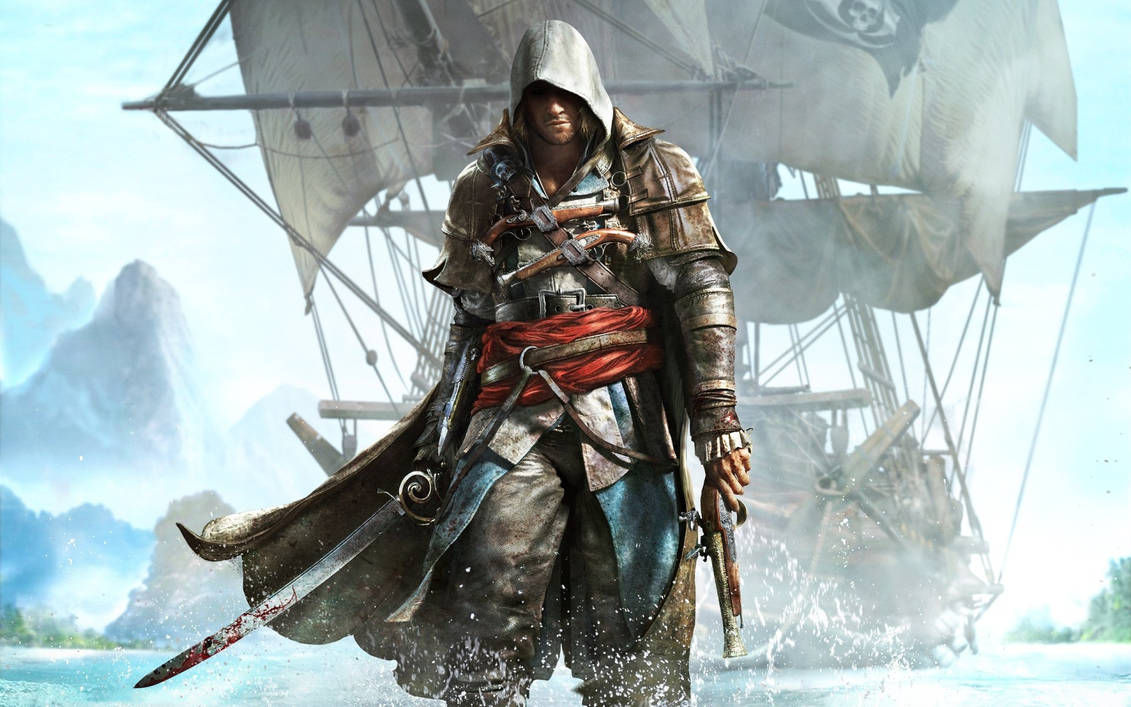
Thirteen years after the original, Ubisoft Singapore has rebuilt Assassin’s Creed IV: Black Flag from the ground up on the latest Anvil engine — the same technology used for Assassin’s Creed Shadows. This is not a remaster. Every system has been rewritten: combat is now parry-driven, stealth and parkour have been modernised, naval mechanics are deeper, and the dynamic environment reacts to the world in ways the 2013 version never could.
Beyond the technical overhaul, new narrative content has been added. Blackbeard and Stede Bonnet receive dedicated storylines. Three new officers join Edward Kenway’s crew as part of the main narrative. New sea shanties, pets, and a photo mode are included. GRAMMY-nominated composer Woodkid, who contributed to the original, has returned with a reimagined track. The tailing missions that frustrated players in 2013 have been redesigned.
What hasn’t been included: the Freedom Cry DLC is not integrated, the original multiplayer has been removed, and modern-day playable sections have been trimmed significantly. The team’s stated focus was delivering the best possible single-player pirate experience. PS5 Pro gets advanced ray tracing with no performance compromises. The original 2013 Black Flag will remain available separately.
If you’re picking one game from July, this is the first candidate.
The most anticipated indie release of the month, and possibly one of the most-watched indie launches of 2026 full stop. The development team behind Ratatan includes Hiroyuki Kotani and other veterans of Sony Japan — the people who made Patapon. If you know Patapon, you understand the foundational concept: issue rhythmic commands to an army of small creatures, time them to music, march, attack, defend, retreat. The Ratatan modernises that formula for 2026 with a seven-button input system, procedurally generated stages, deep customisation of your Cobun army, and online co-op for up to four players.
The game has already proven itself. Launching on PC via Steam Early Access in September 2025, it sold over 100,000 units in its first month — a strong result for an indie of this type. Multiple free updates followed during the Early Access period, and the July console release represents the polished full version. The Nintendo Indie World Showcase appearance signalled Nintendo’s confidence in the title, and Switch 2 physical pre-orders opened in April 2026 alongside digital editions.
The Early Purchase bonus is the Spirit Sword Banbansord — a legendary weapon available to anyone who buys the game in the launch window.
A Splatoon spinoff that inverts the series’ usual priorities. While the mainline Splatoon games are built around multiplayer turf wars, Raiders leads with a single-player campaign. The player takes on the role of a mechanic — Inkling or Octoling — accompanied by the members of Deep Cut from Splatoon 3, exploring a new location called the Spirhalite Islands.
A four-player co-op mode sits alongside the solo content, with difficulty that scales based on how many players are present. The game was originally announced through Nintendo’s Today! app in June 2025 — quietly, with no Direct — and similarly received its release date and new trailer via the same app in April 2026, skipping a traditional Nintendo Direct reveal entirely. As a Switch 2 exclusive, it functions as a demonstration of what the new hardware enables for the franchise, and provides one of the few dedicated first-party reasons to own the newer console heading into mid-summer.