★ GPU Buyer’s Guide — May 2026 ★
Top 5 Best GPUs
to Buy in 2026
Every tier covered — from budget 1080p to absolute 4K flagship — ranked by real-world benchmark data from 20+ independent sources.
20+ Sources
5 Tiers Covered
Updated: May 2026
Blackwell · RDNA 4 · Battlemage
2026 marks the most competitive GPU generation in years. NVIDIA’s Blackwell RTX 50 series, AMD’s RDNA 4 RX 9000 series, and Intel’s Battlemage Arc have each carved out genuine niches across all price brackets. This ranking is compiled from 20+ independent editorial and benchmark sources — including GamersNexus, Tom’s Hardware, TechRadar, PC Gamer, PCWorld, TechSpot, KitGuru, TFTCentral and others — with a focus on real-world gaming performance, efficiency, and value at each price tier. Prices reflect approximate market rates as of May 2026; actual retail pricing may vary.
#1
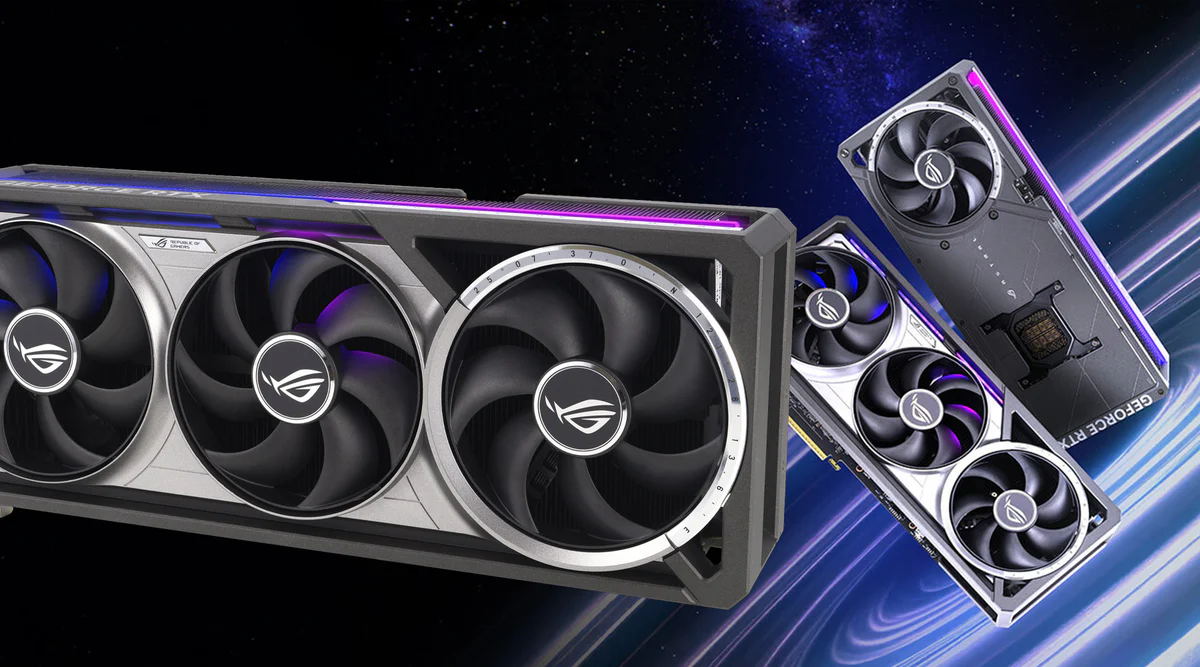
NVIDIA GeForce RTX 5090
★ Absolute Flagship — Best 4K & AI GPU
MSRP
$1,999
Architecture
Blackwell GB202
CUDA Cores
21,760
VRAM
32 GB GDDR7
Memory Bus
512-bit
Bandwidth
1,792 GB/s
TDP
575 W
PSU Required
1,000 W minimum
AI Features
DLSS 4 + Multi-Frame Gen
Tom’s Hardware describes the RTX 5090 as “the most powerful consumer graphics card ever made”, and by every metric that claim holds. GamersNexus benchmarks document a 20–50% rasterization uplift over the RTX 4090 at 4K (depending on the title), and 27–35% gains in ray tracing. Tweaktown notes that native 4K gaming at 120+ FPS with full ray tracing enabled is now a reality with this card. The 32 GB of GDDR7 memory and 1.79 TB/s bandwidth represent a 78% bandwidth improvement over the 4090. TechRadar called it “absurdly powerful,” while acknowledging it delivers an up to 50% boost over its predecessor in select workloads. The key caveat: the 575 W TDP demands a genuine 1,000 W PSU (confirmed via multiple reviewers experiencing shutdowns on 850 W units), and real-world retail prices have regularly exceeded $2,500–$3,200 for AIB partner cards.
✔ Pros
- Fastest consumer GPU ever — by a significant margin
- 32 GB GDDR7 VRAM — no memory constraints for any workload
- 1,792 GB/s bandwidth — 78% over RTX 4090
- DLSS 4 Multi-Frame Generation — up to 4× frame multiplier
- Makes 8K gaming genuinely viable
- 4× faster AI (Stable Diffusion, LLM inference) vs. RTX 4090
- Neural Shaders — new level of cinematic realism
- PCIe 5.0 support, future-proof connectivity
✕ Cons
- $1,999 MSRP — real-world prices often $2,500–$3,200+
- 575 W TDP — requires premium 1,000 W+ PSU
- Memory thermals reach 88–90 °C under sustained load
- Performance gains over 4090 vary widely by title (20–50%)
- Severely overkill for anything below 4K gaming
- Massive physical size — clearance issues in many cases
- Founders Edition stock persistently scarce at MSRP
Best for: Enthusiasts who game at 4K or 8K, AI/ML researchers, 3D artists and video professionals who need the absolute ceiling of consumer GPU compute — and whose budget is not the deciding factor.
#2
AMD Radeon RX 9070 XT
Best Overall Value — Editor’s Pick
MSRP
$600
Architecture
RDNA 4
Compute Units
64 CU
VRAM
16 GB GDDR6
Memory Bus
256-bit
Bandwidth
640 GB/s
TDP
304 W
AI Upscaling
FSR 4
RT Gen
3rd Gen Ray Accelerators
PC Gamer names the RX 9070 XT its best current GPU to buy in 2026 — and for good reason. GamersNexus benchmarks show the 9070 XT trading blows with the RTX 5070 Ti across most rasterization titles, while costing roughly $150–250 less. Gaming PC Guru gives it a 9.1/10, calling it “the value champion for 4K gaming in 2026.” AMD’s RDNA 4 architecture brings a massive generational leap in ray tracing versus RDNA 3, while FSR 4 image quality is now described by Tech2Geek as “imperceptibly different from DLSS 4 in standard gaming.” The 16 GB GDDR6 VRAM is class-leading at this price point and provides strong future-proofing. GamersNexus noted that the 9070 XT “nearly tying the RTX 4080 is embarrassing for NVIDIA’s mid-range card.”
✔ Pros
- Matches or beats RTX 5070 Ti in most rasterization games
- 16 GB GDDR6 — most VRAM at this price tier
- $150–250 cheaper than the RTX 5070 Ti ($750)
- Massive RDNA 4 ray tracing improvement over RDNA 3
- FSR 4 now rivals DLSS 4 image quality in standard gaming
- 640 GB/s bandwidth — strong future-proofing
- Excellent power efficiency for the performance level
- 3rd-gen RT accelerators + 2nd-gen AI accelerators
✕ Cons
- Ray tracing still trails NVIDIA in extreme path-tracing workloads
- Crushed by NVIDIA in titles like Black Myth: Wukong with full RT
- No equivalent to DLSS Multi-Frame Generation
- Less mature AI/compute ecosystem vs. NVIDIA Tensor cores
- AMD drivers can be less polished at launch
- Availability at MSRP can be inconsistent at launch
Best for: Gamers who prioritize rasterization performance and raw value, 1440p and 4K players who don’t rely heavily on path tracing, and anyone who wants the most VRAM possible without approaching $1,000.
#3
NVIDIA GeForce RTX 5080
Best High-End NVIDIA — Near-4090 Performance
MSRP
$999
Architecture
Blackwell GB203
CUDA Cores
10,752
VRAM
20 GB GDDR7
Memory Bus
320-bit
Bandwidth
~960 GB/s
TDP
360 W
AI Features
DLSS 4 + MFG
PCIe
PCIe 5.0
TechRadar praised the RTX 5080 for “bringing RTX 4090 performance to more mainstream consumers,” achieving roughly 90% of the 4090’s raw speed. Tom’s Hardware benchmarks show it averaging ~178.5 FPS at 1440p and ~133.9 FPS at 4K — notably within striking distance of the RTX 5090 at half the price. GamersNexus found the 5080 generally 9–16% faster than the 5070 Ti. Notably, the RTX 5080 launched at the same $999 MSRP as the previous-generation RTX 4080 Super, representing a rare price reduction in the high-end tier. KitGuru notes the efficiency improvements are meaningful even if the raw generation-on-generation jump disappointed some enthusiasts. With 20 GB GDDR7 VRAM and PCIe 5.0 support, the 5080 is well-positioned for the next several years of AAA titles.
✔ Pros
- ~90% of RTX 5090 performance at half the price
- 20 GB GDDR7 — generous VRAM for 4K and future titles
- Full DLSS 4 suite including Multi-Frame Generation
- PCIe 5.0 — maximum bandwidth headroom
- Slimmer form factor and better cooling vs. RTX 4080
- Same MSRP as the outgoing RTX 4080 Super ($999)
- Excellent 4K ray tracing and path tracing performance
- Strong AI workload performance via Blackwell Tensor Cores
✕ Cons
- Modest 7–16% gen-on-gen rasterization uplift vs. RTX 4080 Super
- Still $999 — not accessible for most buyers
- RTX 5090 outperforms it by 30–69% at 4K for double the price
- Best performance gains require DLSS 4 — native gains are smaller
- 360 W TDP — needs a quality 850 W+ PSU
- AIB partner card prices often exceed MSRP
Best for: High-end gamers and creators who want excellent 4K performance, full access to Blackwell AI features, and more VRAM than any AMD or Intel competitor at this tier — without paying the RTX 5090 premium.
#4
NVIDIA GeForce RTX 5070 Ti
Best Premium 1440p — Strong 4K Capable
MSRP
$750
Architecture
Blackwell GB203
CUDA Cores
8,960
VRAM
16 GB GDDR7
Memory Bus
256-bit
TDP
~300 W
1440p Avg FPS
~187 FPS (Final Fantasy XIV)
AI Features
DLSS 4 + MFG
RT Performance
Strong (Blackwell 4th Gen)
PCGamesN called the RTX 5070 Ti their “new favorite 1440p gaming graphics card.” Tom’s Hardware benchmarks show it handling 1440p and 4K comfortably at $750, while tomeraider.com confirms it “eats max-quality 1440p alive and withstands 4K.” GamersNexus measured it 28–35% ahead of the older 4070 Ti at 4K. The major caveat: GamersNexus titled their launch review “Do Not Buy” due to AIB cards selling at $1,000+ rather than MSRP, and its rasterization gains over the 4070 Ti Super being only 9–11%. However, as PC Gamer’s May 2026 update notes, real-world pricing has since stabilized, and at MSRP the 5070 Ti’s DLSS 4 Multi-Frame Generation access — which the 4070 Ti Super lacks entirely — makes it a meaningful jump for gamers who leverage AI upscaling.
✔ Pros
- Dominant 1440p performance — 100–190+ FPS across most titles
- Competent 4K, especially with DLSS 4 Quality upscaling
- DLSS 4 Multi-Frame Generation — exclusive to RTX 50 series
- 28–35% faster than RTX 4070 Ti at 4K
- 16 GB GDDR7 — excellent VRAM headroom
- Solid path tracing performance in supported titles
- PCIe 5.0 connectivity
✕ Cons
- Only 9–11% rasterization gain over RTX 4070 Ti Super
- AIB cards regularly sell above MSRP ($900–$1,100+)
- RX 9070 XT matches it in rasterization for $150 less
- Some driver inconsistencies at launch (4070 Ti Super occasionally faster)
- Not a compelling upgrade from RTX 4080 or 4080 Super
- GamersNexus recommends avoiding unless at or near MSRP
Best for: Gamers on a 1440p high-refresh-rate monitor who want full DLSS 4 access including Multi-Frame Generation, and plan to step up to 4K in the future — provided the card is available close to its $750 MSRP.
#5
Intel Arc B580
Best Budget GPU — 1080p & 1440p Value King
MSRP
$249
Architecture
Battlemage Xe2
Shaders
2,560
VRAM
12 GB GDDR6
Memory Bus
192-bit
TDP
~190 W
Display Outputs
3× DP 2.1 + HDMI 2.1a
Power Connector
1× 8-pin PCIe
Process Node
TSMC N5
PCWorld called the Intel Arc B580 “the first worthy budget GPU of the decade” and “the graphics card gamers have been begging for since the pandemic.” Trusted Reviews awarded it its highest budget GPU score, noting it “outpunches the $300 RTX 4060 and RX 7600” by 15%+ in Cyberpunk 2077 at ultra settings. Tech4Gamers confirmed it beats all competing cards on average at 1440p across their test suite. The 12 GB GDDR6 at $249 is exceptional — every competing GPU at this price point ships with 8 GB. TechSpot’s re-review introduced an important nuance: the B580 benefits from a modern CPU (Ryzen 5 5600 or newer) and struggles with CPU overhead on older systems, which is a genuine consideration for budget builders upgrading from older platforms.
✔ Pros
- 12 GB GDDR6 at $249 — beats every competitor on VRAM at this price
- 15%+ faster than RTX 4060 and RX 7600 in multiple titles
- Top average 1440p performance in its price bracket
- 3× DisplayPort 2.1 — best-in-class display connectivity for budget
- Only 190 W TDP — runs on a single 8-pin connector
- Surprisingly strong ray tracing for the price tier
- TSMC N5 — modern, efficient process node
- XeSS 2 upscaling with Frame Generation support
✕ Cons
- Requires a modern CPU (Ryzen 5 5600+) — poor fit for older platforms
- Intel GPU driver maturity still trails AMD and NVIDIA
- Performance inconsistent in some specific game engines
- No compute ecosystem comparable to CUDA
- XeSS game support library smaller than DLSS or FSR
- No overclocking headroom on Founders-style variants
Best for: Budget-conscious builders with a modern platform (Intel 12th gen+ or Ryzen 5000+) who want 1080p/light 1440p gaming with the most VRAM available under $300 — and are willing to accept Intel’s smaller driver and feature ecosystem.
Quick Comparison
| # | GPU | Architecture | VRAM | TDP | MSRP | Best For |
|---|---|---|---|---|---|---|
| 1 | NVIDIA RTX 5090 | Blackwell GB202 | 32 GB GDDR7 | 575 W | $1,999 | 4K / 8K / AI flagship |
| 2 | AMD RX 9070 XT | RDNA 4 | 16 GB GDDR6 | 304 W | $600 | Best overall value |
| 3 | NVIDIA RTX 5080 | Blackwell GB203 | 20 GB GDDR7 | 360 W | $999 | High-end 4K gaming |
| 4 | NVIDIA RTX 5070 Ti | Blackwell GB203 | 16 GB GDDR7 | ~300 W | $750 | Premium 1440p / 4K |
| 5 | Intel Arc B580 | Battlemage Xe2 | 12 GB GDDR6 | ~190 W | $249 | Budget 1080p / 1440p |
Sources Referenced
01
GamersNexus
RTX 5090, 5080, 5070 Ti, RX 9070 XT benchmarks
02
Tom’s Hardware
GPU hierarchy, RTX 5090 & 5070 Ti reviews
03
TechRadar
Best GPU guide (May 2026), RTX 5090 & 5080 reviews
04
PC Gamer
Best graphics cards 2026 (updated May 2026)
05
PCWorld
Intel Arc B580 review — “first worthy budget GPU”
06
TechSpot
RTX 5070 Ti review, Arc B580 re-review, RX 9070 history
07
KitGuru
NVIDIA RTX 5080 review
08
Tweaktown
RTX 5090 Founders Edition deep review
09
PCGamesN
RTX 5070 Ti review — “new favorite 1440p card”
10
Tech2Geek
RX 9070 XT benchmarks — 1440p & 4K deep-dive
11
Gaming PC Guru
RX 9070 XT 2026 review — 9.1/10 “4K value champion”
12
Trusted Reviews
Intel Arc B580 review — “outstanding price-to-performance”
13
Tech4Gamers
Intel Arc B580 detailed 1080p & 1440p benchmarks
14
Gaming Nexus
NVIDIA GeForce RTX 5080 architecture & gaming review
15
Profolus
Intel Arc B580 pros & cons analysis
16
Hyper Cyber
RTX 5080 & 5070 Ti FPS benchmark breakdowns
17
Tomeraider
RTX 5070 Ti 4K benchmark review
18
RedSwitches
13 best GPUs for gaming 2026 — tier ranking
19
PositionIsEverything
GPU benchmark hierarchy 2026
20
Ars Technica
AMD RX 9060 XT review — RDNA 4 budget context
21
Gamer Hardware
Best gaming GPU 2026 buying guide